
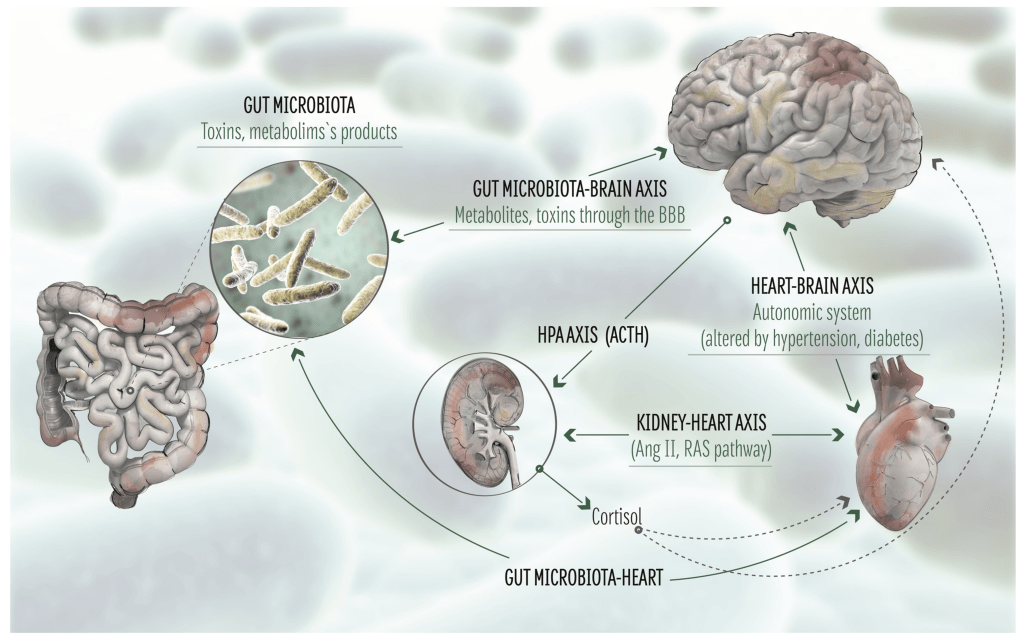
Modern science is confirming what yogic wisdom has taught for centuries: we are more than just minds—we are integrated systems of thinking, feeling, and sensing. The head-heart-gut brain axis is a communication network within the body that governs emotional health, intuitive insight, and physiological balance.
Yoga therapy offers a unique and powerful way to bring harmony to these three centers—helping you feel more connected, more present, and more aligned from the inside out.
The Three Brains Within: Head, Heart, and Gut
1. The Head Brain: The Thinker
The cephalic brain, housed in the skull, is the center of logic, planning, and decision-making. It’s brilliant—but it can become overactive, leading to worry or disconnection from the body.
2. The Heart Brain: The Feelings Center
The heart contains thousands of neurons and has its own intelligence. It processes emotion, creates coherence, and helps us connect to love, compassion, and intuition.
3. The Gut Brain: The Intuitive Guide
The enteric nervous system, often called the “second brain,” lives in the gut. It guides instinct, influences mood, and holds our deepest sense of safety and intuition.
When these three brains communicate effectively, we feel centered, clear, and whole.
How Yoga Supports Head-Heart-Gut Integration
Yoga is not just movement—it’s a multi-layered practice that engages all parts of our inner intelligence. Let’s look at how it supports each center:
1. Movement (Āsana): Reconnecting to the Gut Brain
Yoga postures stimulate the vagus nerve, the key communication line between the brain, heart, and gut. They also improve digestion, relieve stress, and awaken body-based intuition.
Try These Poses:
- Apanasana (knees to chest): Soothes the belly
- Seated twist: Improves gut mobility
- Cat-cow: Awakens the core and balances the nervous system
These movements ground your awareness and help release emotional tension held in the lower body.
2. Breath (Prāṇāyāma): Anchoring the Heart
Breathing slowly and rhythmically influences the heart’s rhythm, calming the nervous system and activating feelings of safety, openness, and love.
Recommended Practices:
- Nadi Shodhana (alternate nostril breathing): Balances energy channels
- Three-Part Breath: Connects belly, ribs, and chest
- Coherent breathing (inhaling/exhaling for 5–6 seconds): Builds heart-brain harmony
Breath is the bridge between the conscious and unconscious—it calms, centers, and connects.
3. Meditation & Mindfulness: Aligning the Head
Meditation quiets the chatter of the head brain and opens space for listening. The mind learns to observe rather than control—allowing the heart and gut to speak.
Effective Techniques:
- Body scan: Strengthens interoception (awareness of internal states)
- Loving-kindness: Activates compassion and connection
- Mantra meditation: Reduces rumination and builds focus
Meditation makes the head brain a wise leader—not a controlling one.
The Vagus Nerve: Your Internal Superhighway
The vagus nerve connects all three brains. A healthy vagal tone means better digestion, emotional balance, and resilience. Yoga therapy improves vagal tone through:
- Gentle movement
- Humming and chanting (e.g., Om)
- Deep diaphragmatic breathing
- Restorative postures and Yoga Nidra
This is how yoga becomes more than a physical practice—it becomes nervous system medicine.
Yoga Philosophy Meets Modern Neuroscience
Ancient yogic teachings align beautifully with what we now know about the brain-body connection:
- Maṇipūra Chakra (gut): Linked to personal power and instinct
- Anāhata Chakra (heart): Center of love and balance
- Ājñā Chakra (head): Home of insight and wisdom
Yoga helps us awaken these energy centers—not in isolation, but in harmony.
A Sample 3-Brain Yoga Practice
Ground (Gut):
- Begin in Child’s Pose, hands on belly
- Flow through Cat-Cow and gentle Seated Twist
Open (Heart):
- Move into Cobra Pose and Bridge Pose
- Focus on chest expansion and softening the breath
Center (Head):
- Sit quietly in meditation
- Practice Coherent Breathing or silently repeat the mantra So Hum
Complete the practice in Savasana, sensing the alignment of all three centers.
Final Thoughts
We live in a world that often prioritizes thinking over feeling and doing over being. But true well-being arises when the head, heart, and gut are in alignment—when our thoughts are clear, our emotions balanced, and our instincts trusted.
Yoga is the art of returning to this inner coherence.
It is not about escaping the body—but re-inhabiting it with grace, presence, and intelligence.
